


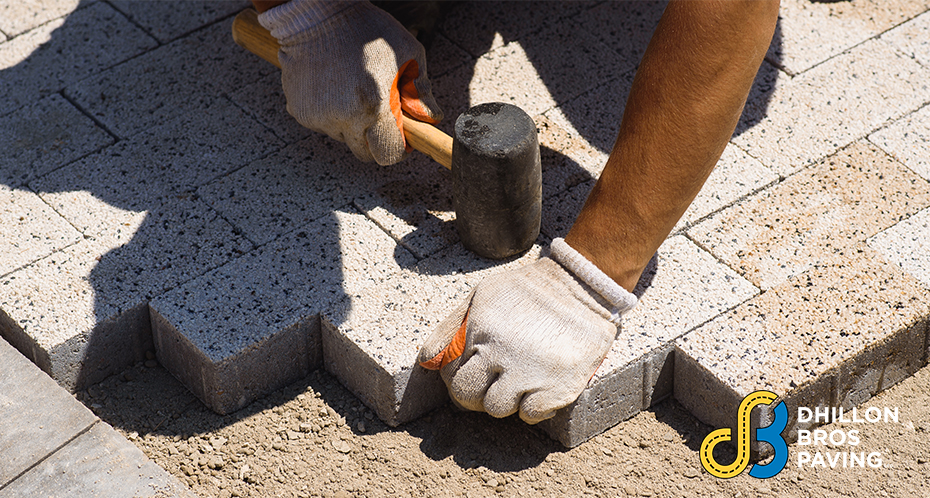
A homeowner in Richmond had their driveway redone with concrete paving stones three years ago. Last summer, two stones near the edge started lifting and shifting. The pavers themselves were in perfect condition. The problem was the sub-base, which the contractor had rushed to save time.
Concrete paving stones are one of the few outdoor improvements that genuinely add both function and value. But most people spend their time selecting color and texture while paying almost no attention to what goes underneath. That is usually where things go wrong.
Why the Sub-Base Matters More Than the Stone Itself
A concrete paving stone is designed to move slightly with ground shifts. That is actually an advantage over poured concrete, which cracks when the soil beneath it settles or heaves. But that flex only functions correctly when the base is properly built and compacted.
A solid base involves excavating 8 to 12 inches of soil, depending on the application. Driveways need more depth than walkways or patios. Below the pavers goes a compacted gravel aggregate layer, then a bed of screeded sand. Skip any of those steps and you will see shifting, dipping, and lifted edges within a few years.
This is where most DIY failures happen. Laying the stones themselves is relatively straightforward. The excavation, compaction, and drainage grading is where experience changes the outcome.
What Installed Cost Actually Looks Like
Installed cost for concrete paving stones in the Vancouver and Lower Mainland area typically runs between $15 and $30 per square foot, depending on stone type, pattern complexity, site access, and whether existing material needs to be removed first.
A standard double-car driveway is roughly 400 square feet. At $20 per square foot, that is $8,000. At $25 per square foot, it is $10,000. That range reflects real variation in preparation depth, drainage requirements, and stone grade.
Premium stones, tumbled finishes, or textured surfaces cost more than standard flat pavers. Complex patterns like herringbone or diagonal require more cuts and add labor time. A straight running bond on a flat site with clear access is always the more affordable choice.
Get at least three quotes. More importantly, compare the scope of work across those quotes, not just the total number. Two quotes at different prices might involve very different base depths or preparation methods. The lowest price often reflects a shortcut somewhere in the base.
Drainage and Slope: The Detail Most People Miss
This comes up more often than any other factor in after-the-fact complaints. Paving stones require a consistent slope to move water away from structures. Typically that is a 1 to 2 percent grade, roughly 1/8 inch for every foot of run.
If your current surface is flat, or if it slopes toward your house, a competent contractor addresses that during installation. Ask specifically how drainage will be handled before work begins. If the answer is vague, press for specifics.
Permeable paver systems allow water to pass through the joints into a prepared sub-base below. They cost more upfront but can significantly reduce surface water problems, which matters in areas with heavy rainfall. They are increasingly required by municipal stormwater codes in parts of Metro Vancouver.
Maintenance and What to Expect Long Term
One genuine advantage of concrete paving stones over poured concrete is repair. A cracked or heaved poured concrete slab requires breaking out and re-pouring. With pavers, individual stones can be lifted, the base re-leveled, and the stones reset. The repair is contained.
Joints should be re-sanded every few years as polymeric jointing sand breaks down from traffic and weather. Polymeric sand, which hardens when wet, significantly reduces weed growth compared to plain sand. Ask your contractor specifically what they use.
Sealing the surface every two to four years protects color and makes cleaning easier. It is not mandatory, but it extends the appearance and life of the installation. Budget for it as part of ongoing maintenance rather than treating it as optional.
Dhillon Bros Paving Ltd. has done commercial and residential paving work in Vancouver and the Lower Mainland for more than 35 years, including concrete paving stones, hardscaping, driveways, and snow removal. If you have a paving project coming up, we offer free estimates and can assess what your specific site needs.
Stay Updated: Get asphalt driveway maintenance tips, commercial paving advice, and repair guides directly on Google. Click here to prefer Dhillon Paving on Google.