


There’s a reason asphalt is the most common paving material in Canada. It handles heavy loads, withstands freeze-thaw cycles, and costs less per square foot than most alternatives, including concrete paver stones. But the finished product is only as good as the contractor behind it.
Hiring qualified asphalt paving contractors is the single most important decision a property owner makes during a paving project. Materials matter, certainly. But even premium hot mix asphalt will crack and settle within a few years if the ground beneath it wasn’t properly prepared.
A paving job has far more to it than laying down a dark surface and rolling it flat. Professional asphalt paving is an engineered process with several interdependent steps. Skip any one of them, and the rest eventually fail.
The sequence begins with site evaluation. The contractor assesses soil conditions, drainage patterns, the slope of the terrain, and the intended use of the surface (residential driveway, commercial parking lot, industrial access road). Each of these factors influences the design of the sub-base and the asphalt mix selected.
The sub-base is the structural layer beneath the asphalt. It distributes weight, manages water drainage, and prevents the surface from shifting or sinking.
Proper preparation starts with excavation. Existing material is removed to the required depth, and the exposed subgrade is inspected for soft spots, organic material, or poor drainage. The excavated area is then filled with layers of crushed aggregate (typically gravel or crushed rock), utilizing professional aggregate installation, with each layer compacted by heavy equipment to a specific density.
In British Columbia’s Lower Mainland, where rainfall is heavy for much of the year, drainage engineering is especially critical. Water trapped beneath asphalt will freeze in winter, expand, and crack the surface from below. Proper grading ensures water flows away from the pavement, and drainage infrastructure (catch basins, perimeter drain tiles) moves it off the property entirely.
Hot mix asphalt (HMA) is produced at a plant by heating aggregate and asphalt binder together to precise temperatures. Different mixes exist for different applications. A residential driveway uses a finer surface mix than a commercial lot designed for truck traffic (which may also require subsequent line painting and road marking). The contractor should select the appropriate mix based on the project’s load requirements, not simply the cheapest available option.
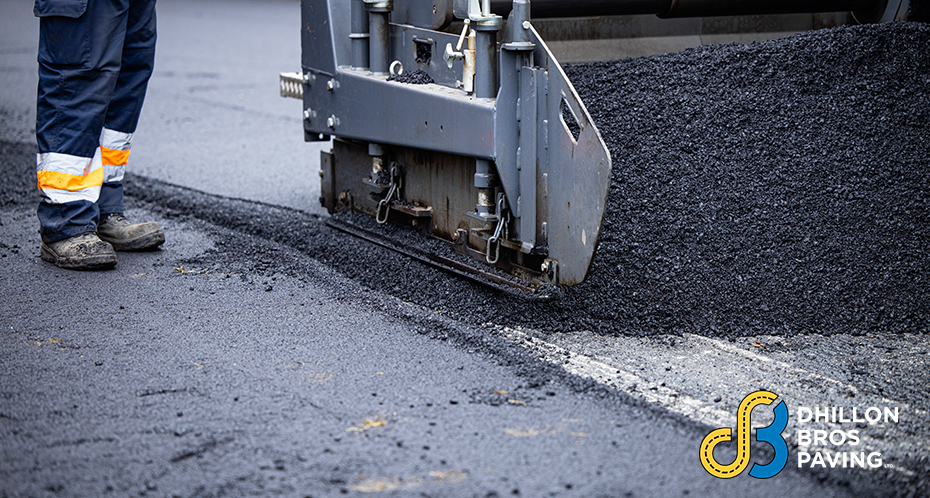
The hot mix is delivered to the site by truck and laid out by a paving machine, which distributes it at a consistent thickness. While the asphalt is still hot and workable, heavy steel-drum rollers compact it in multiple passes. The compaction process eliminates air pockets and creates a dense, durable surface.
Timing matters here. Asphalt must be compacted before it cools below a certain temperature, or the result is a porous, weak surface. Experienced crews coordinate delivery, spreading, and rolling as a continuous operation.
Not all asphalt paving contractors deliver the same level of workmanship. A few indicators separate reliable professionals from operators looking for a quick job.
Check for proper licensing and adequate insurance coverage. A reputable contractor carries commercial general liability insurance sufficient to protect the property owner if something goes wrong. Always ask about warranties on both materials and workmanship, and get them in writing.
Accreditation from the Better Business Bureau is another reliable signal. It indicates a track record of resolving customer concerns and maintaining professional standards. Owner-supervised projects, where the business owner is present on site rather than delegating entirely to subcontractors, tend to produce more consistent results.
Transparent quoting matters, too. A detailed estimate should break down costs by excavation, sub-base, materials, and labour. Vague lump-sum quotes often conceal shortcuts.
Asphalt is durable, but it isn’t maintenance-free. Seal coating, applied every few years, protects the surface from UV damage, water penetration, and chemical spills (such as fuel and motor oil). Without it, the asphalt oxidises, becomes brittle, and develops cracks. For more tips, explore our paving and maintenance blog.
Crack sealing should be done promptly. A small crack left through a rainy Lower Mainland winter becomes a pothole by spring. Hot-pour rubberised sealant is the professional standard; it flexes with temperature changes and lasts longer than cold-applied alternatives.
Potholes that have already formed require cut-and-replace patching for a permanent fix. Cold patch material works as a temporary solution in winter, but it should be replaced with a proper hot mix repair when conditions allow.
Dhillon Bros Paving Ltd. has been serving residential, commercial, and municipal clients across British Columbia’s Lower Mainland since 1984. Backed by a BBB A+ rating, $5 million in liability coverage, and a commitment to owner-supervised projects, we provide free on-site assessments and transparent estimates. Property owners in the Greater Vancouver area can reach the team at (604) 839-5531 to discuss their paving needs.