


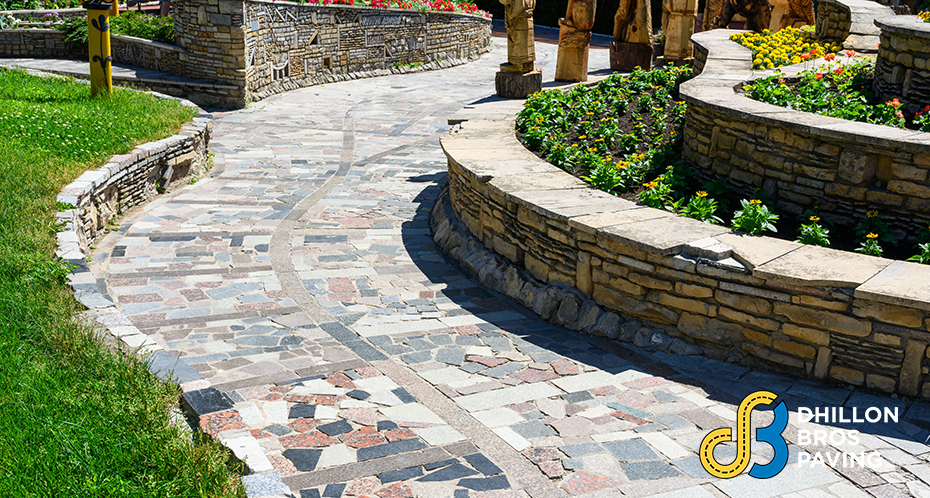
A beautifully crafted landscape does more than just boost curb appeal—it extends your living space right into the great outdoors. While plants and lawns bring life to a yard, “hardscaping”—the non-living, structural elements like patios, walkways, retaining walls, and driveways—provides the essential foundation.
If you are looking to transform your outdoor space, this plain-language guide answers the biggest practical questions about planning a successful hardscaping project.
It comes down to balancing appearance, longevity, and your budget:
Hardscape Materials Comparison: Durability and Cost
For quick reference, here is how the most common hardscaping materials stack up:
| Material | Upfront Cost | Durability | Main Benefit |
| Poured Concrete | Low | Moderate | Quick installation, budget-friendly |
| Stamped Concrete | Moderate | Moderate | Mimics stone patterns at a lower price |
| Interlocking Pavers | Moderate – High | Very High | Flexible, crack-resistant, easy to repair |
| Natural Stone | High | Excellent | Unique aesthetic, permanent investment |
What’s Included in a Hardscape Design Plan?
A professional hardscape design plan is a comprehensive architectural blueprint for your yard. It includes detailed scale drawings, layout dimensions, material specifications, elevations (slopes), utility layouts (like outdoor lighting or gas lines), and a critical grading and drainage strategy.
Drainage Issues with Hardscaping: What You Need to Know
Water always wins. When you replace porous grass with hard, solid surfaces, rainwater has nowhere to go. A poorly sloped patio will channel water directly toward your home’s foundation, leading to catastrophic basement flooding. A proper installation must include built-in grading (sloping the surface gently away from structures), permeable base layers, and sometimes hidden French drains or catch basins to manage heavy downpours safely.
How to Design Your Hardscape on a Budget & Small Yard Ideas
You don’t need a massive budget to create a beautiful space. In smaller yards, focus on a single, high-impact feature—like a cozy paver stone patio just large enough for a dining set—rather than paving the entire lot. You can also save significantly by choosing standard-shaped pavers over complex, custom patterns, or using affordable gravel for secondary walkways while reserving premium stone for main gathering areas.
How to Avoid Getting Overcharged for Hardscaping
The absolute best defense against getting overcharged is education and comparison. Always request detailed, itemized estimates from at least three licensed contractors. A good quote should break down the specific costs of excavation, base materials, surface materials, and labor hours. Beware of bids that seem impossibly cheap—they almost always indicate a contractor who intends to skimp on the critical gravel base layers hidden beneath the surface.
Warranty and Guarantees in Hardscaping: What’s Standard?
A reputable hardscaping company should offer two distinct types of protection: a manufacturer’s warranty on the structural integrity of the actual stones or pavers (which often lasts decades or even a lifetime), and a labor/workmanship warranty from the contractor (typically covering settling, shifting, or major drainage issues for 2 to 5 years).
Should You Hire Your Neighbor or Family Member for Hardscaping?
While it is tempting to hire a friend or family member to save a few dollars, it often leads to disaster. Hardscaping requires heavy machinery, structural engineering, and precise water management. If the project settles unevenly or floods your home, addressing the issue with a loved one can cause permanent personal friction. It is always safest to keep business strictly professional.
Permitting Requirements for Hardscaping Projects
Permit rules depend entirely on your local municipality. Simple, ground-level patios rarely require a permit. However, if you are building a retaining wall over a certain height (often 3 or 4 feet), altering natural lot drainage, or building close to property lines, you will need to secure municipal approval before digging begins.
Hardscaping and Property Taxes: Does It Increase Your Assessment?
Minor updates like basic walkways or a small patio won’t impact your property taxes. However, massive luxury additions—such as a fully engineered outdoor kitchen, structural retaining walls, or an expansive multi-tiered stone terrace—can increase your home’s overall market value, which may eventually lead to a higher property tax assessment.
Best Time of Year to Do Hardscaping Work & Can You Install in Winter?
The absolute best time for hardscaping is late spring through autumn when the ground is dry and stable. Can you do it in the winter? Technically, yes, but it is highly inefficient. Freezing temperatures turn soil rock-solid, making excavation incredibly difficult, and wet winter weather prevents the proper compaction of gravel bases and joint sands.
How to Prepare Your Yard for Hardscaping
Before the crew arrives with heavy machinery, clear the entire zone. Move patio furniture, potted plants, grills, and children’s toys out of the way. Mark out any hidden underground sprinkler lines, ensure the gate locks are accessible, and keep pets securely indoors.
How to Extend the Life of Your Hardscape
To keep your investment looking brand new, sweep away dirt and organic debris regularly so they don’t stain the stone. Power-wash the surfaces gently once a year, top up any washed-out joint sand, and apply a high-quality protective sealer every 3 to 5 years to lock out moisture and prevent weed growth.
Ready to Elevate Your Outdoor Living Space?
From durable new driveways to stunning custom backyard patios, the right stonework completely transforms how you enjoy your home. At Dhillon Paving, we combine premium materials with expert craftsmanship to build beautiful, long-lasting hardscapes tailored right to your lifestyle and budget.
Request your hardscaping estimate or contact our team today to discuss your vision!